Creative Space at Douglass Park
Who gets to call themselves an artist, and how might a shared art space make every parkgoer feel they belong?
Summary
- Team
-
Rebecca Beltrán (project lead)
Arundhuti Bhattacharya
Brian Dexheimer
Regina Ellis
Roger Hong
Xuci Hu
Ashlyn Spilde - Partners
- Duration
- Summer 2025 – Jan 2026
- My Role
-
Community Researcher, Summer 2025
Visual Design and critique
Problem
A shared artmaking space only works if people can find it, navigate it, and feel it is meant for them.
Objective
To understand how the community participates in and navigates the space, and design with them rather than for them.
Outcome
A bilingual wayfinding signage system and visual identity, installed for the Creative Space Grand Opening in January 2026.
Context
A Community to Serve Alongside
This participatory design research project brought a team of M.Des. student designers into partnership with Douglass Park to explore how community members define themselves, their creativity, and their relationship to shared public space.
Drawing on Meet Me in the Middle at Overton (2022) and Why Am I Always Being Researched?, the team approached the park not as a site to study, but as a community to serve alongside, centering an asset-based mindset that asks who holds power and how that power might be redistributed.
Guiding Questions
Community
How is community defined?
Identity
Who gets to call themselves an artist?
Barriers
What barriers, internal and external, stand in the way of that self-perception?
Team Project Values
Belonging
Our number one goal is to welcome all parkgoers into the creative space. They should feel safe and wanted.
Creativity
Everything we make must uplift creativity, especially for those intimidated to try.
Trust
Nurture trust between designers and client, and between client and end users, through transparency and accountability.
Agency
From park staff to park users, people should be empowered to make decisions for themselves by being given the opportunity to do so.
Process
Research by Making
The team committed to research practices built on transparency, restraint, and respect. They limited data collection to what was truly necessary for their deliverables, resisting conventional but excessive metrics, guided by the principle that what gets measured is what gets incentivized.
Lived experience was treated as expertise equal to formal credentials, and community members always understood what was being researched and why, with a clear ability to opt out.
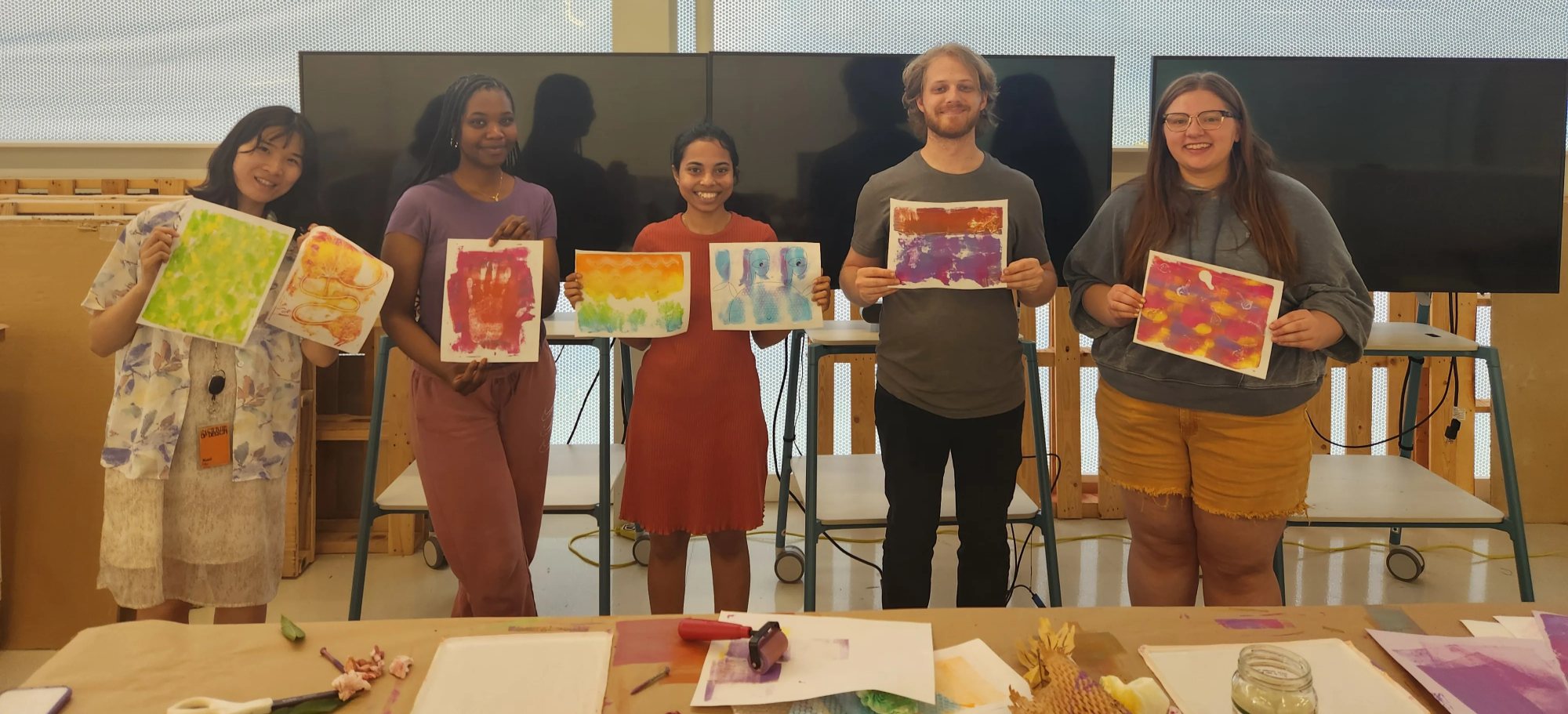
The Summer 2025 research team with their monoprints.
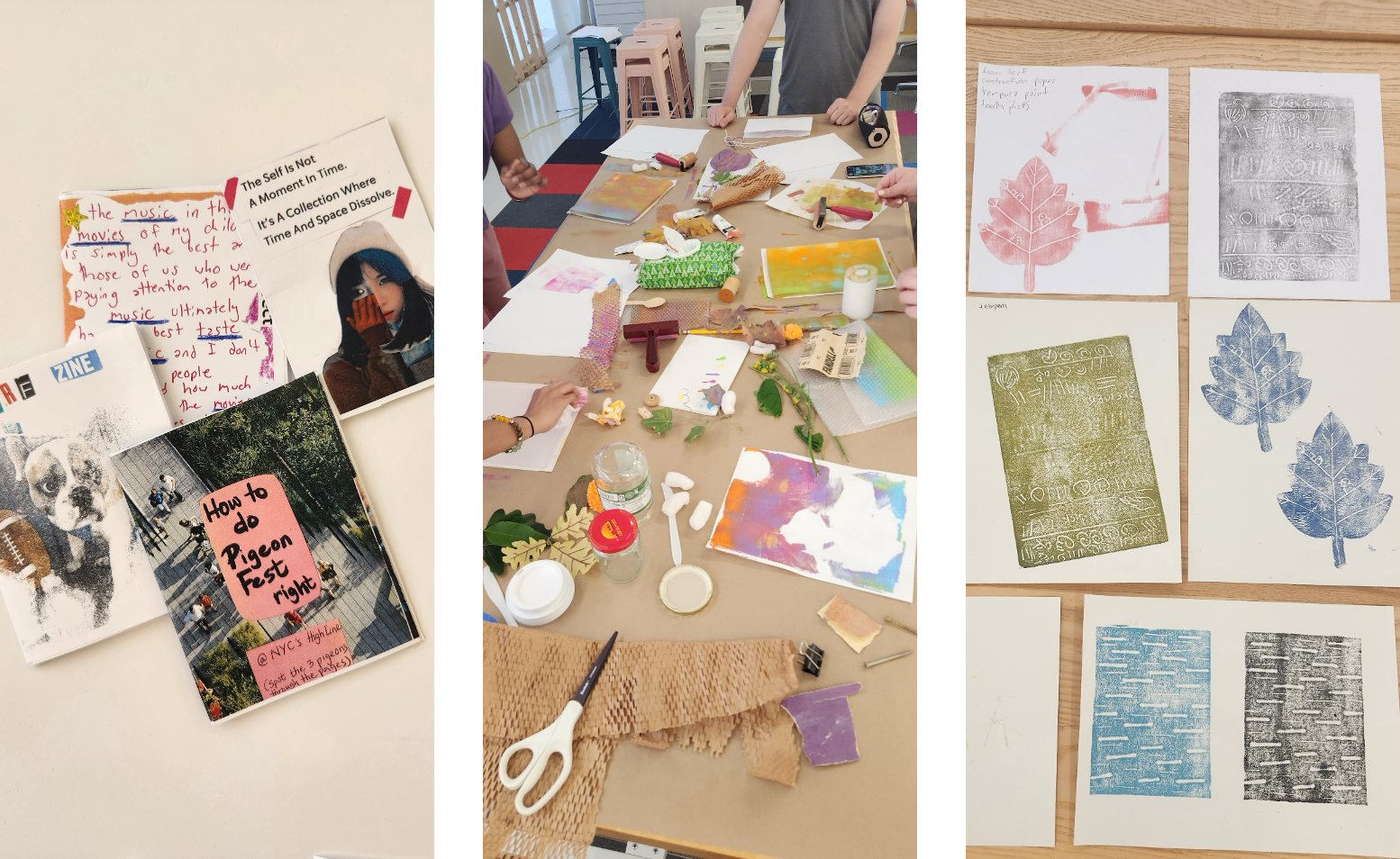
Zines, monoprints and relief prints made while exploring how people enter a creative practice.
In the Park
The team set up hands-on art activities at Douglass Park and invited parkgoers to respond through making. A token vote let visitors share what drew them to try the activity, with sticky notes for anything else.
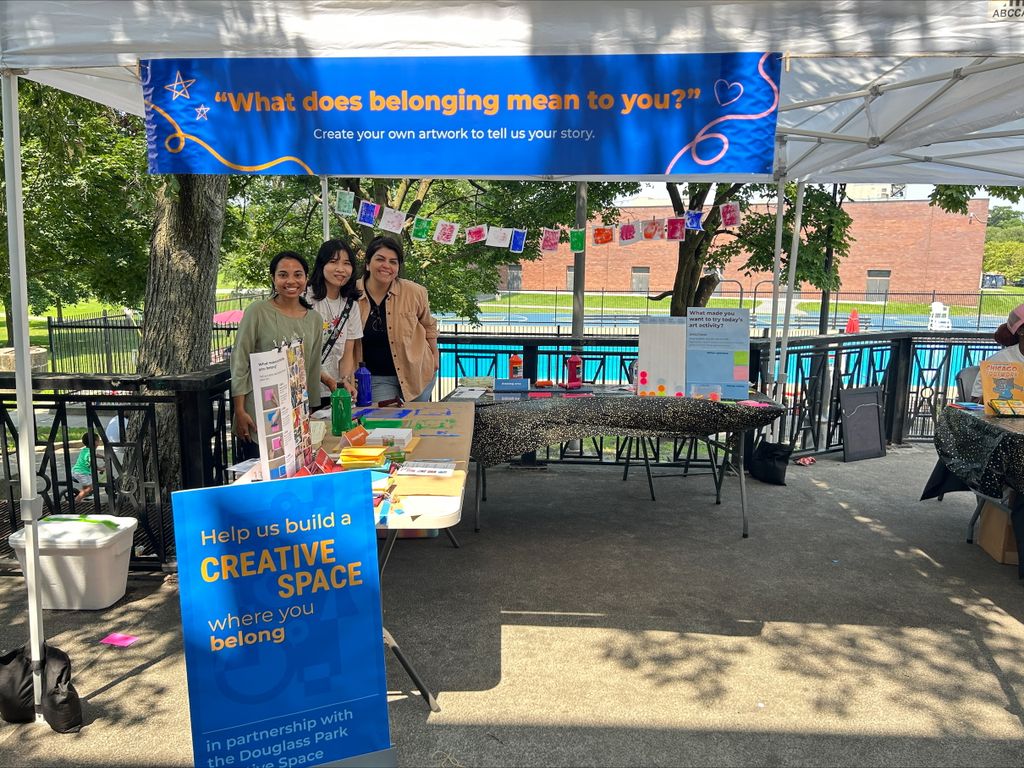
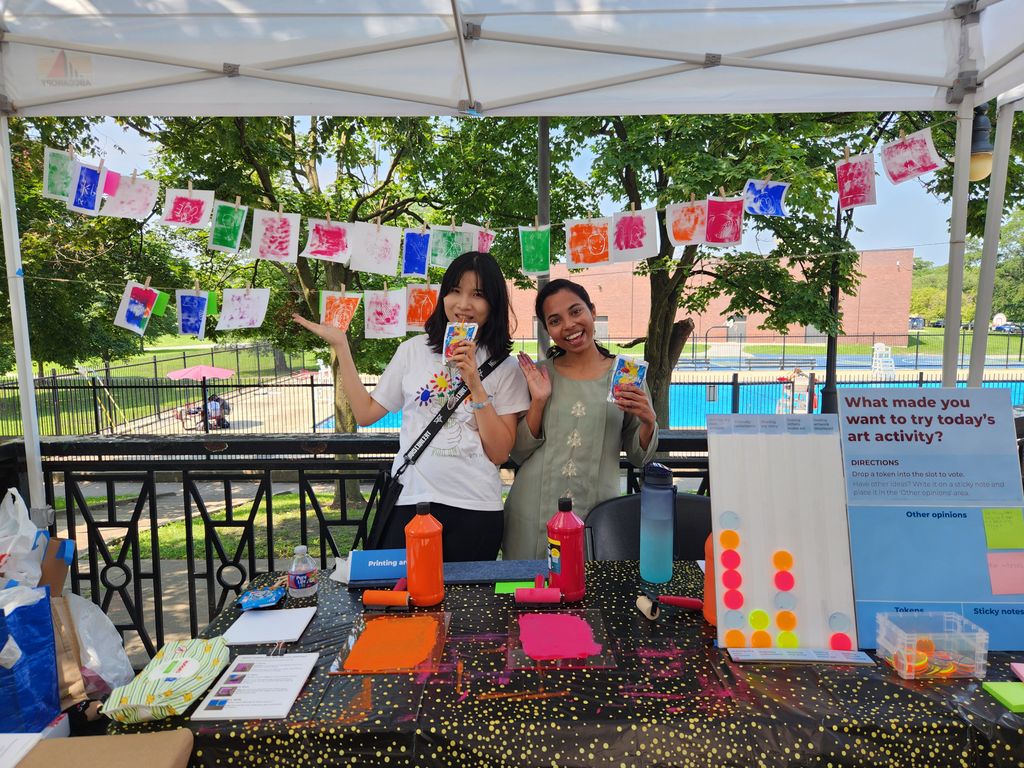
“What does belonging mean to you?” Visitors made an artwork to tell their story.
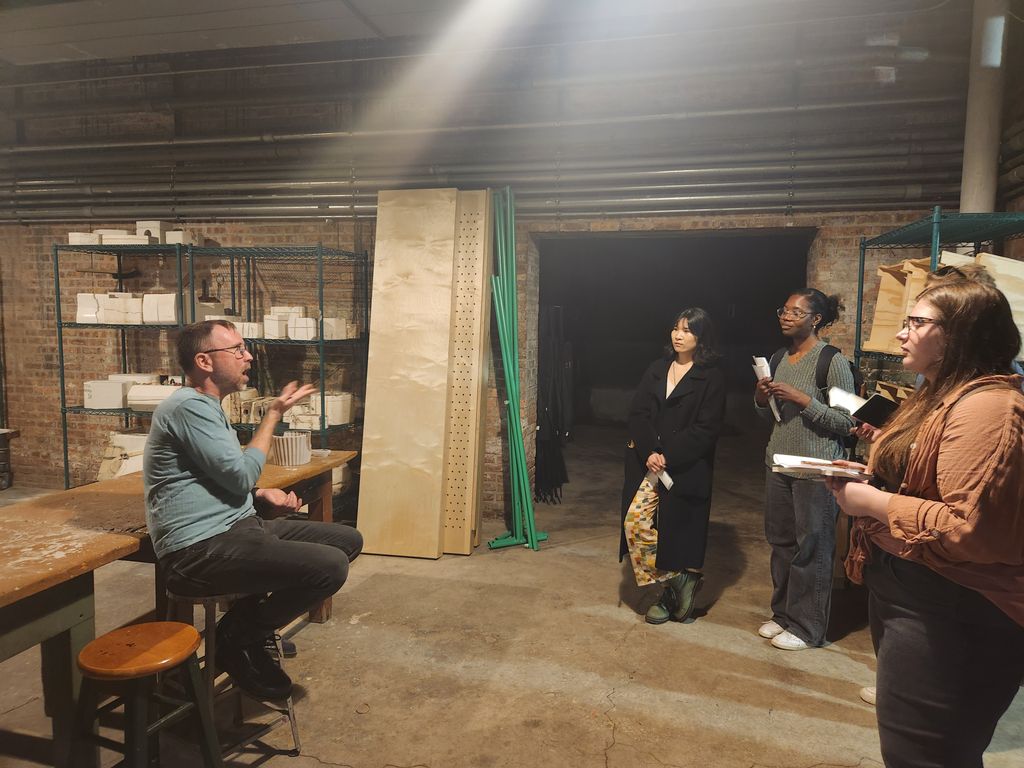
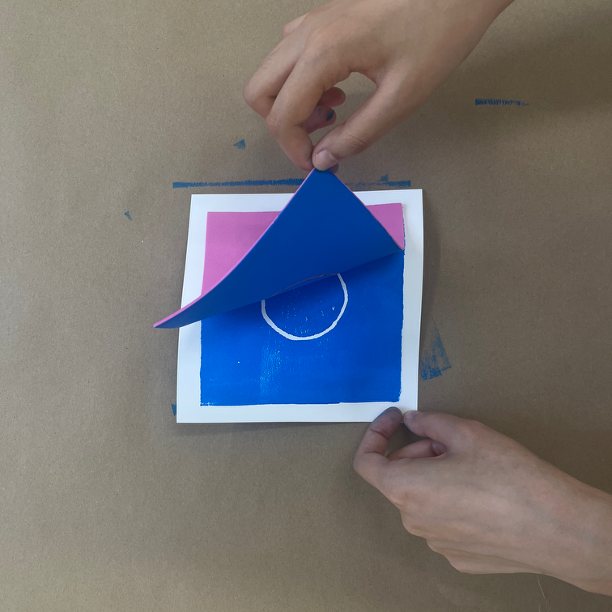
A site visit to the Douglass Park Field House, and a print pulled during a making session.
Critique Session & Workshop
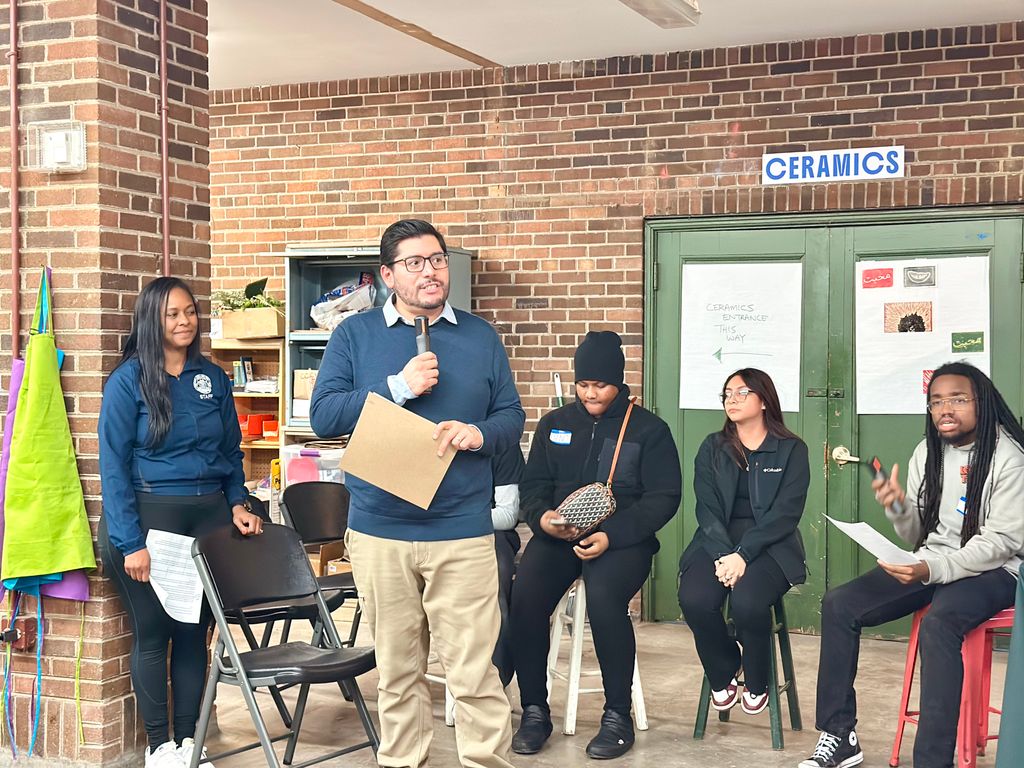
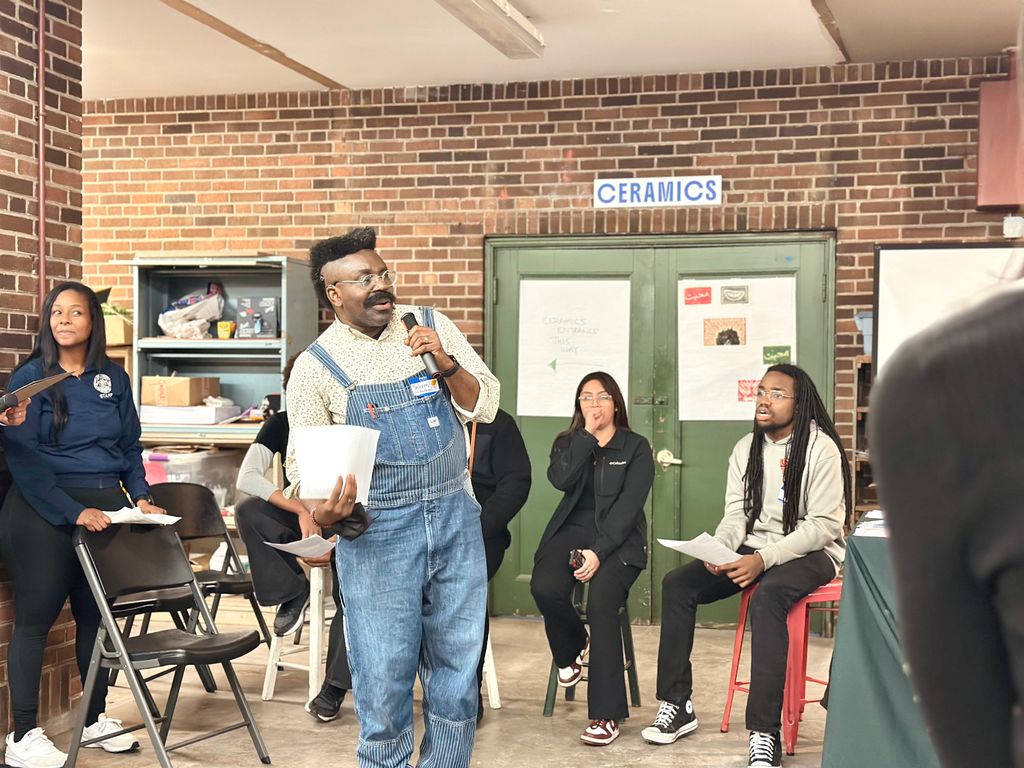
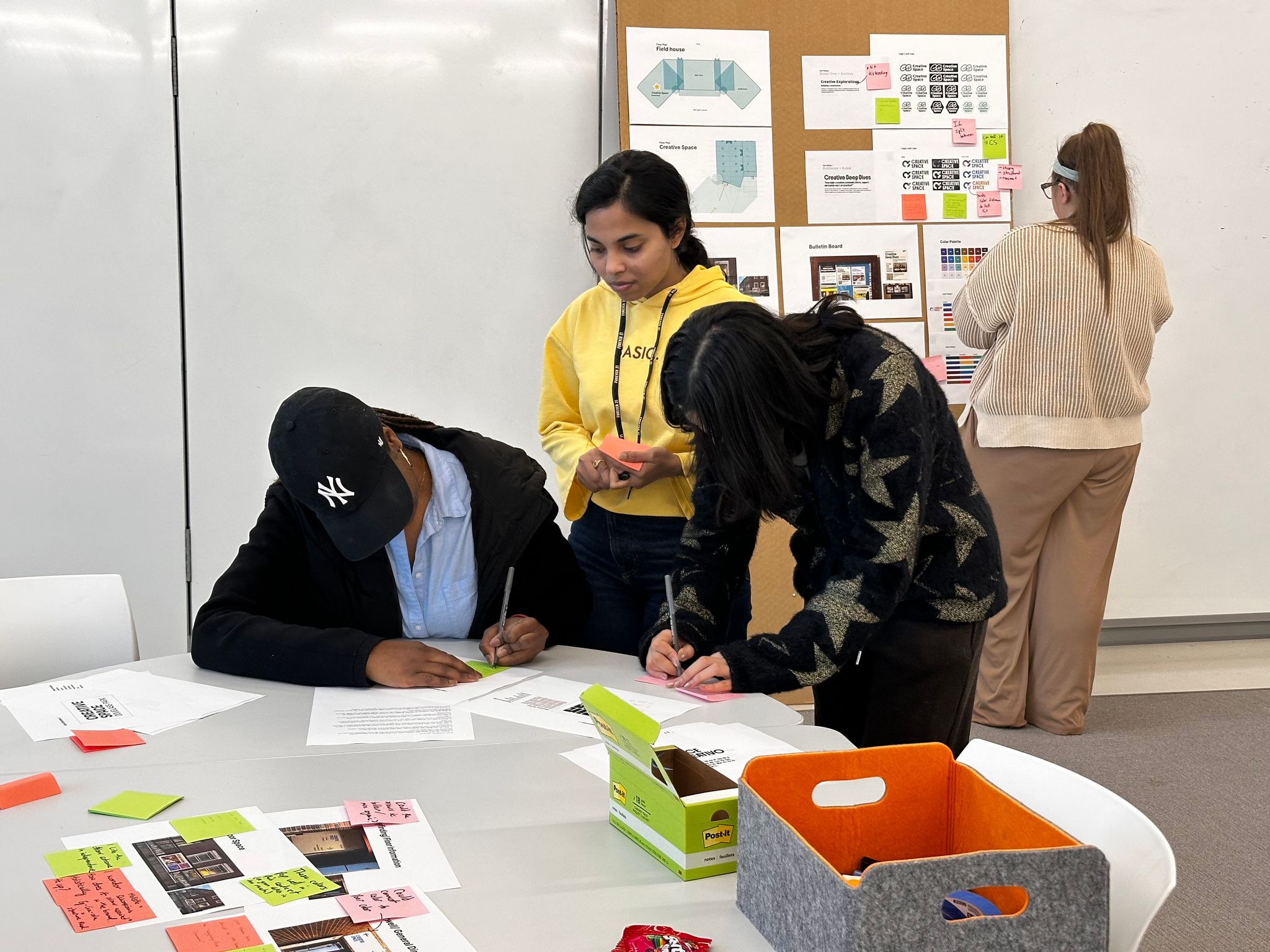
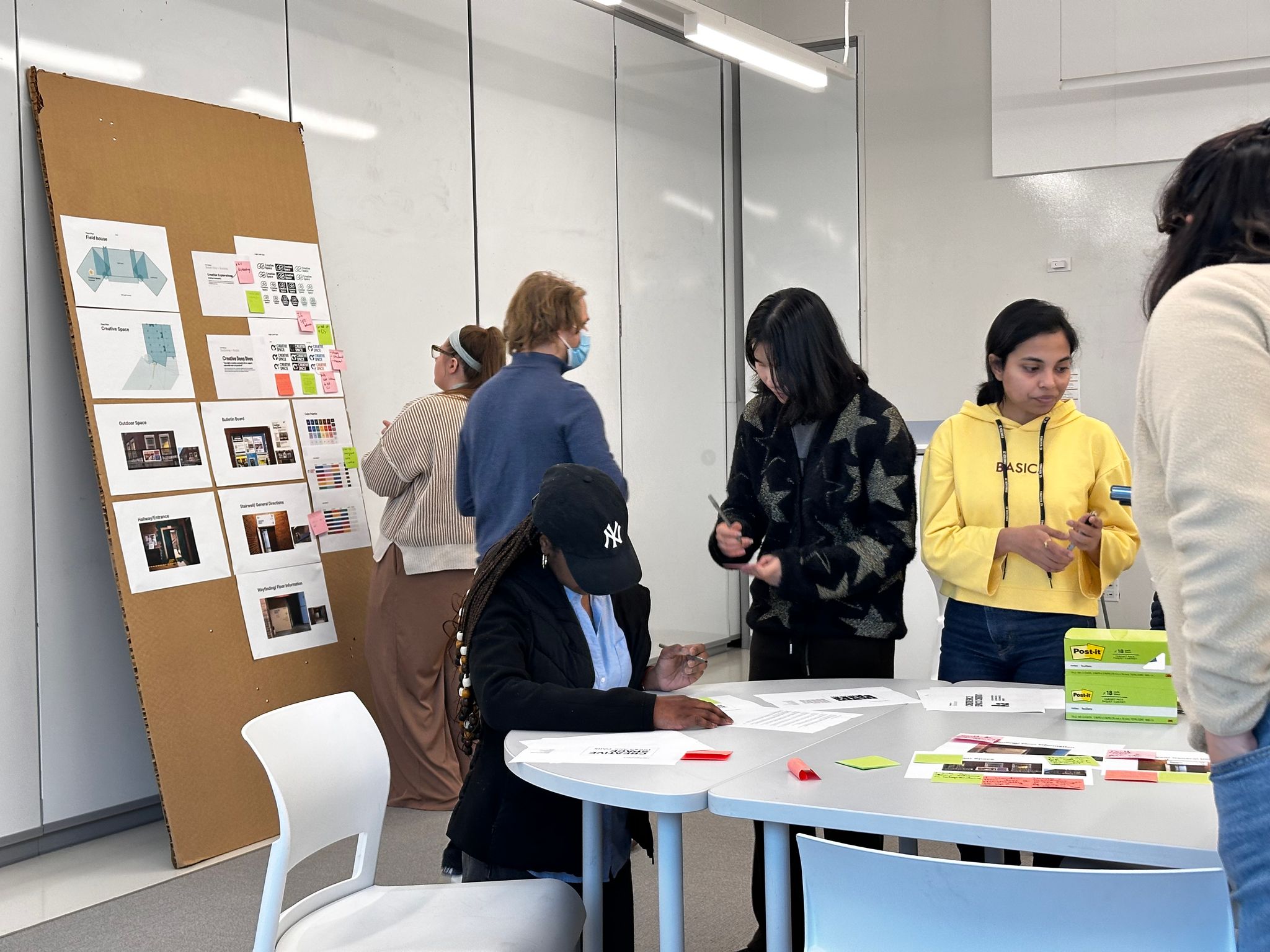
Ahead of the planned Grand Opening, the team reconvened with partners to share how earlier insights had been translated into concrete wayfinding concepts. After project updates, including an updated floorplan identifying key signage touchpoints, attendees spent 40 minutes critiquing style, typography, color and cohesiveness on printed boards.
A digital simulated layout showed how the wayfinding would work along the actual journey through the building, so feedback could be grounded in the real space.
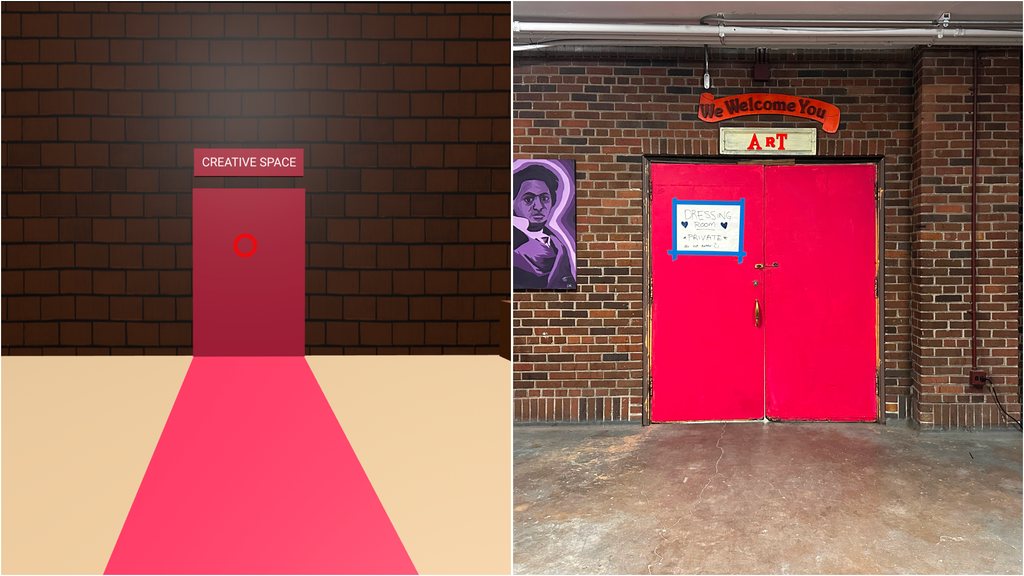
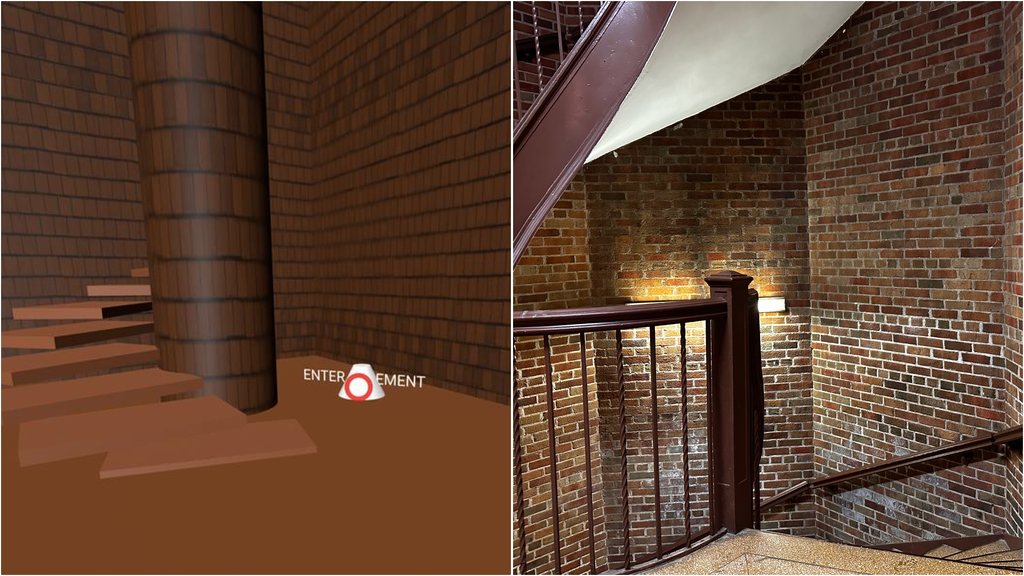
Simulation (left) compared against the physical space (right).
Outcome
A Wayfinding System Built From the Building
Research, park staff and artist feedback came together in a bilingual identity and signage system. Visual design and creative development was shaped by the research team’s findings and critique sessions.
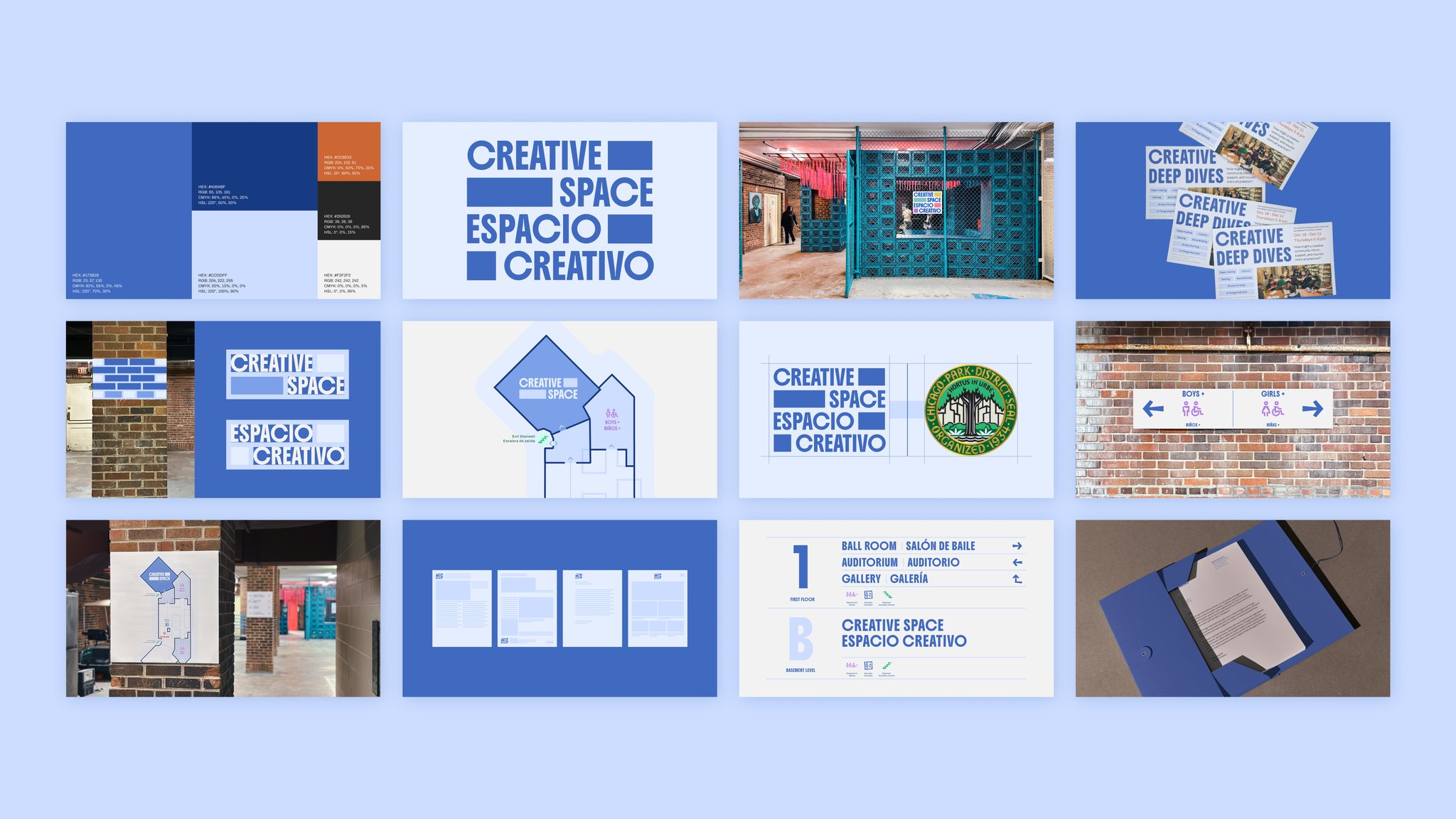
A Logo From the Bricks
The logo was inspired by the signature brick configuration throughout the Douglass Park Field House. It comes in English and Spanish, with and without the park name, plus a horizontal version, an icon and a co-brand with the Chicago Park District.
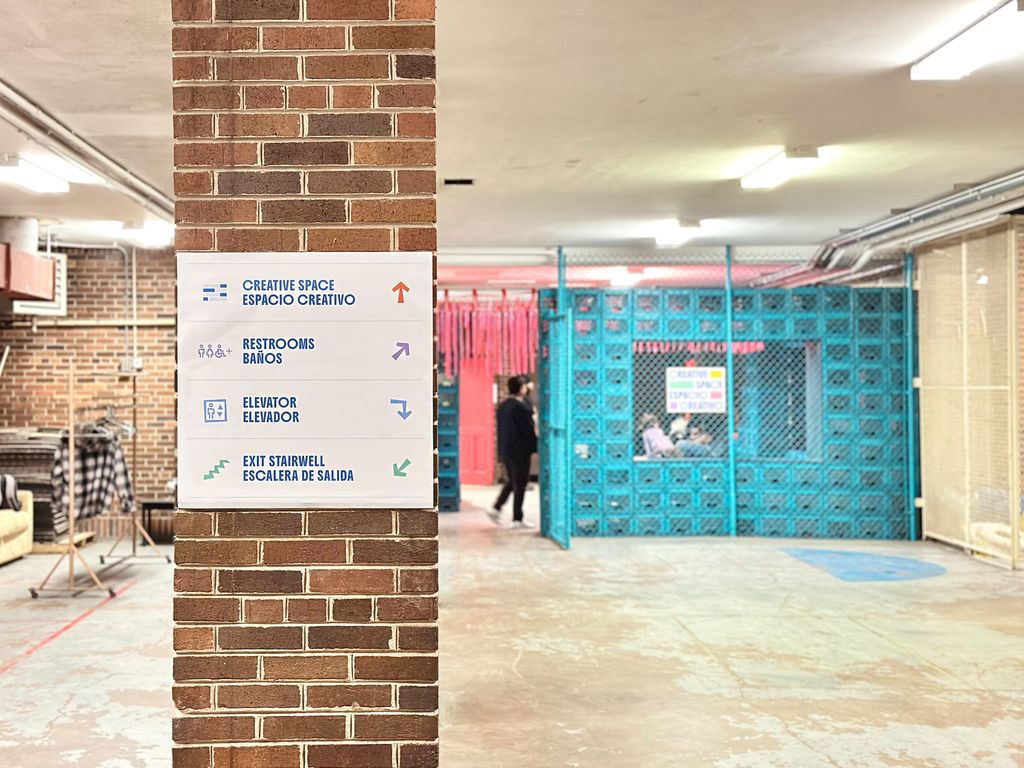
Signage for Everyone
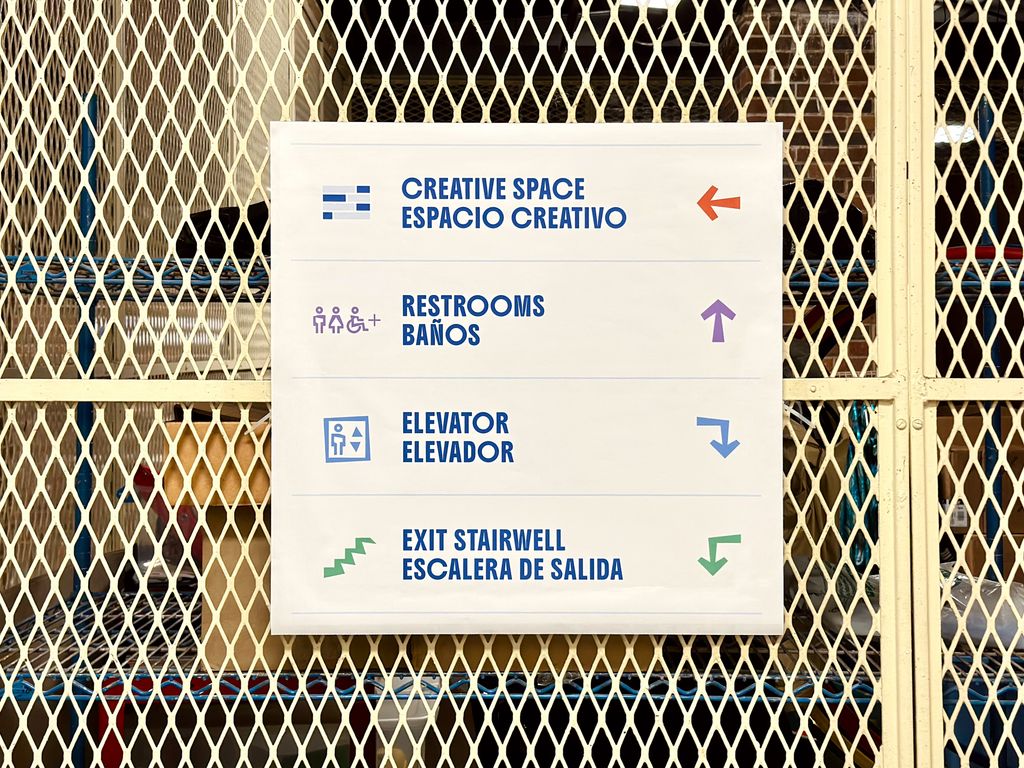
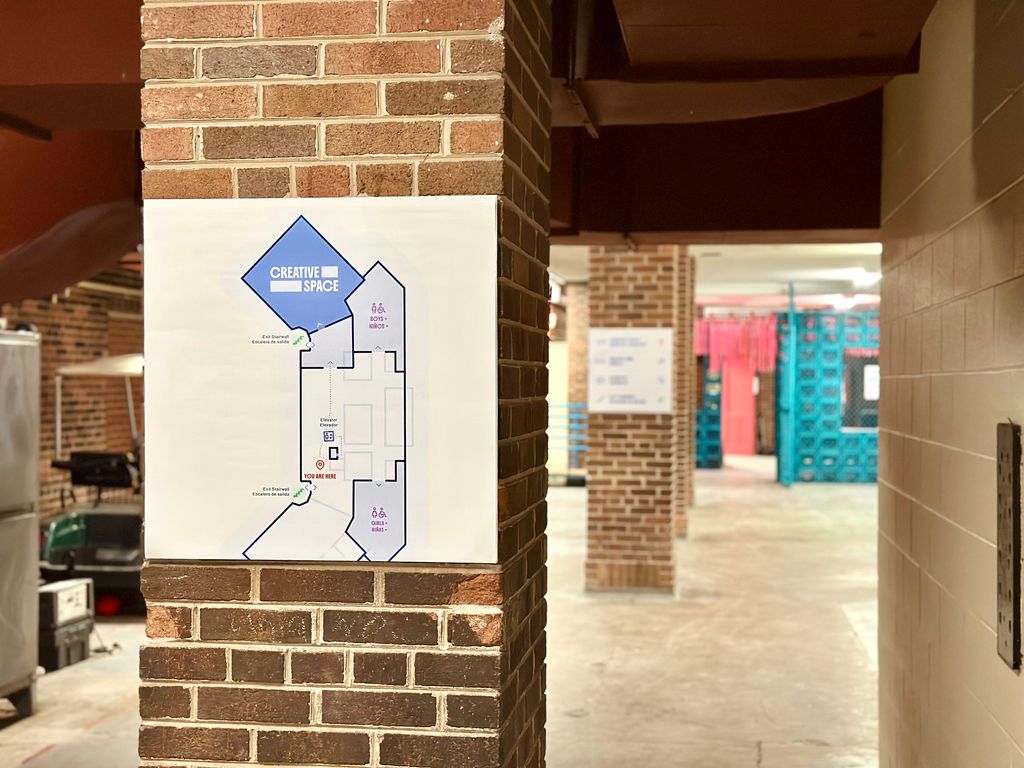
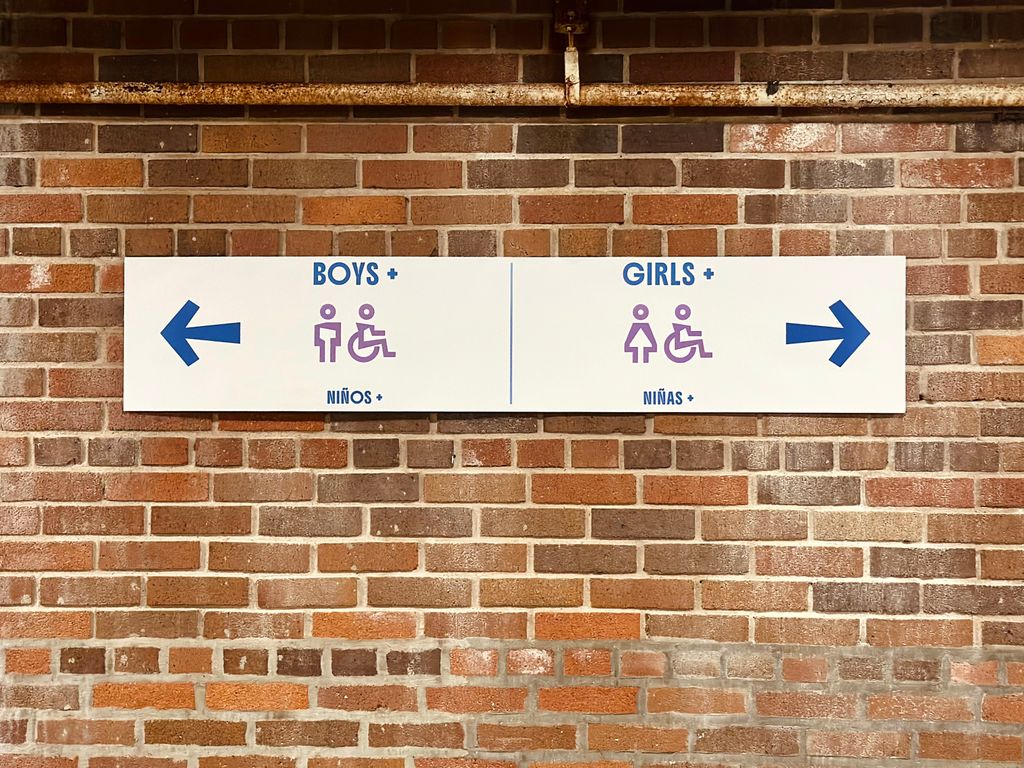
Menus, maps, restroom signs and room labels were printed and installed in January 2026. Every sign pairs English and Spanish, set in Boldonse and Archivo, with icons adapted from Functionable’s Beyond Language public icon pack.
A Toolbox the Park Can Keep Using
The team also built a Visual Toolbox for the Chicago Park District Arts & Culture team: a shared hub of logo files, icons, colors, fonts and editable signage templates, so staff can make new signs themselves in tools like Google Slides.
Opening
Creative Space Grand Opening
The signage system was unveiled at the Creative Space Grand Opening in January 2026, bringing park staff and the community together in the space.